




Cleaning adhesives can be a difficult task.
Different types of adhesives require different methods and solvents for effective removal. Adhesives can leave stubborn residues on surfaces such as glass, metal, plastic or fabric that are unsightly. Functionality can be impaired as a result. Below you will find some common methods and tips for cleaning adhesives:
Determine the type of adhesive: Before attempting to clean the adhesive, you should determine the type of adhesive used. Common adhesives include:
- Two-component construction adhesives
- One-component construction adhesives
- Hot melt adhesives or hotmelt
- Reactive PUR hotmelt adhesives (polyurethane-reactive)
- Solvent and water-based adhesives
Different adhesives may require different cleaning methods
Heat: Certain adhesives can be softened by heat, making them easier to remove. You can use a hairdryer or heat gun on a low setting to heat the adhesive. Once the adhesive is softened, carefully scrape it off with a plastic scraper. Be careful not to damage the surface.
Scraping tools: For more stubborn adhesives, you may need to use scraping tools. Plastic scrapers as well as cloths can be used to carefully scrape or clean the adhesive. Be careful not to scratch or damage the surface.
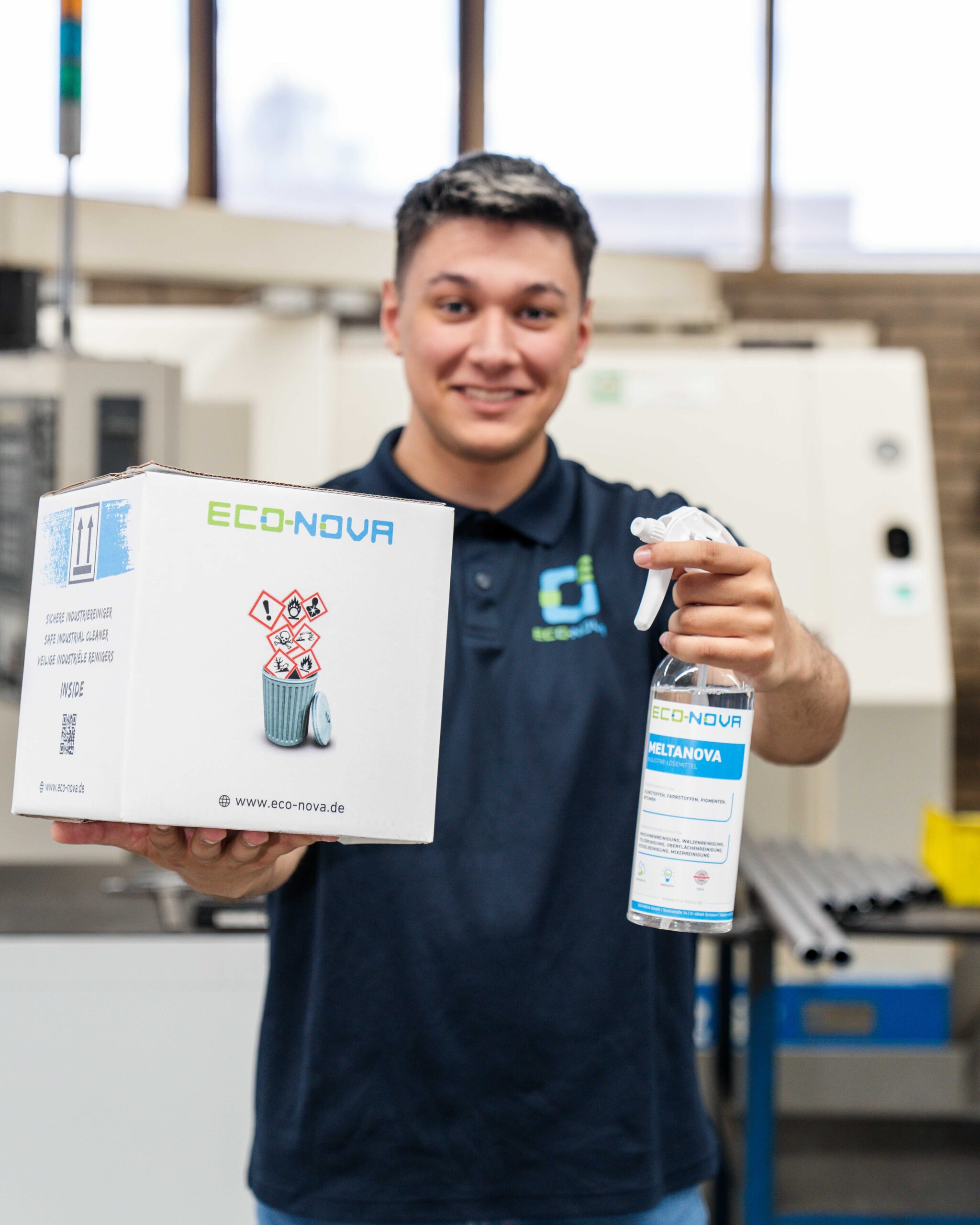
Solvent: There are many adhesive removers and solvents available on the market that have been specially developed for dissolving and removing adhesives. However, these are usually subject to labelling requirements and contain hazardous substances such as isopropanol, acetone or ethylene glycol. In the ECO-NOVA portfolio, you will find safe adhesive removers that do NOT require labelling and are free from hazardous substances such as. Gluemex, Topclean or Dyeclean 200.
Always remember to test a solvent on a small and inconspicuous area first to ensure that it will not damage or discolour the surface. Remember to always read the instructions when using ECO-NOVA cleaners or adhesive removers. Consider the surface condition to avoid damage to the material.